Top Placement Preparation Tips for College Students
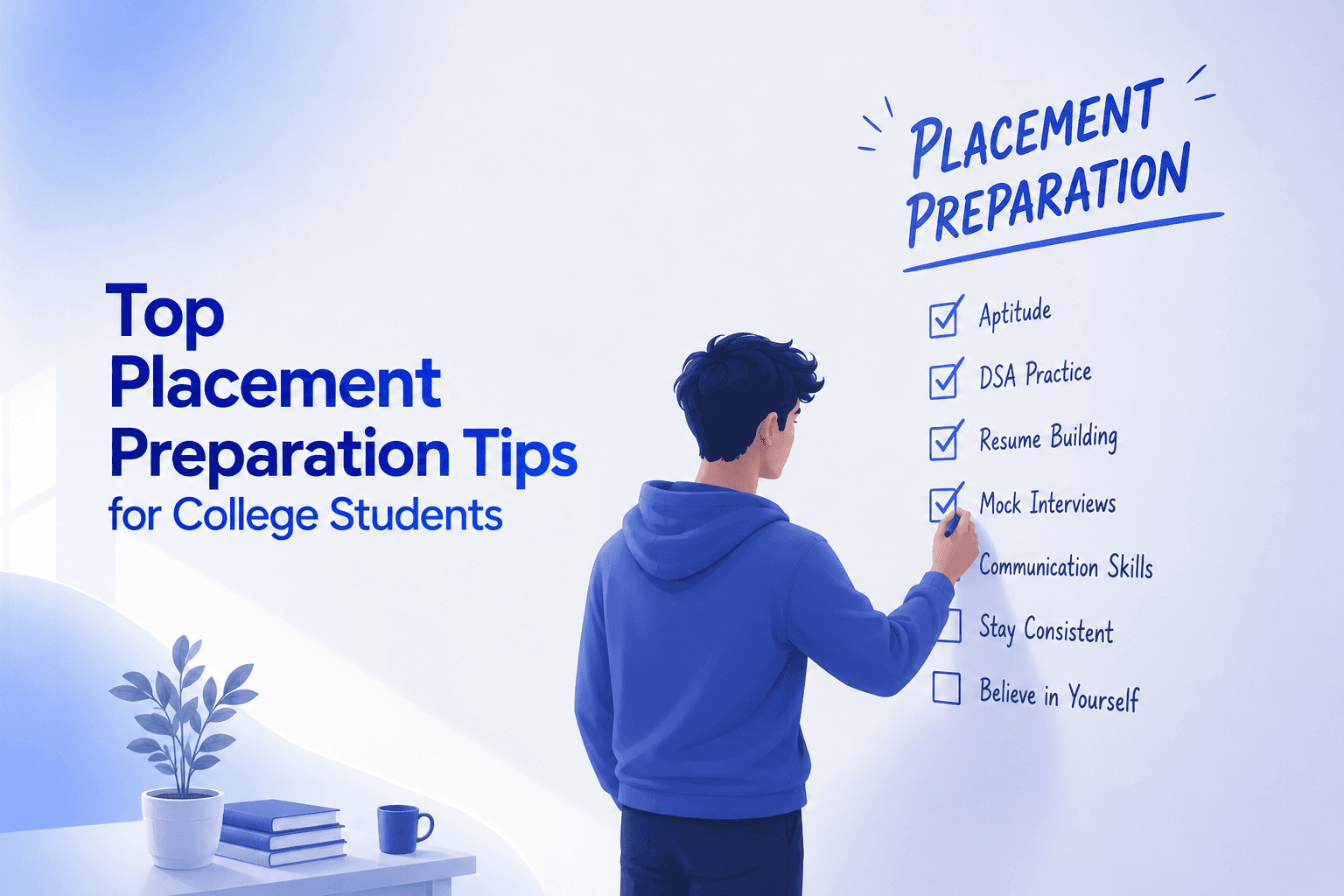
Discover the top placement preparation tips for college students, including resume building, aptitude preparation, technical interview strategies, mock interviews, and internship guidance to improve your chances of getting placed through campus recruitment.
Strong Placement Preparation is no longer about studying only during the final semester. Companies visiting campuses in 2026 evaluate candidates on technical knowledge, aptitude, communication skills, internships, projects, and learning ability. Students who prepare consistently throughout their academic journey often receive better opportunities and multiple interview calls.
Campus recruitment is highly competitive because hundreds of students compete for a limited number of positions. The difference between selection and rejection often comes down to preparation strategy rather than intelligence alone. Building a systematic plan allows students to improve every stage of the hiring process while reducing last-minute pressure.
Modern recruiters expect graduates to combine academic knowledge with practical skills. According to Indeed Career Advice, employers increasingly value problem-solving ability, adaptability, teamwork, and communication alongside technical expertise, making balanced preparation more important than ever.
Continuous learning has also become a major hiring differentiator. Resources available through Coursera Career Articles highlight that students who regularly upgrade their skills through projects and certifications demonstrate stronger workplace readiness than candidates relying only on classroom learning.
How should you structure your 2026 campus placement preparation strategy?
A successful placement strategy begins with understanding recruiter expectations and dividing preparation into manageable sections. Students should allocate dedicated time for aptitude, coding, technical subjects, resume building, communication skills, and mock interviews instead of concentrating on only one area.
A structured approach helps maintain consistency while ensuring that every important competency receives equal attention. Students who revise technical concepts daily while practicing aptitude and interview questions regularly generally perform better during campus recruitment drives.
Daily Strategy Breakdown
Students looking for practical resources can also explore best free placement preparation tools for college students, which covers useful platforms for aptitude practice, coding challenges, and interview preparation.
Building technical knowledge is important, but recruiters also expect candidates to continuously update their skills. According to IBM SkillsBuild, continuous learning and digital skills development significantly improve employability across technology and business roles. A structured roadmap naturally leads to another critical element of placement success: creating a resume that passes recruiter screening and Applicant Tracking Systems.
What are the most effective ways to build an ATS-friendly resume?
An ATS-friendly resume improves shortlisting chances by presenting relevant skills, internships, projects, certifications, and measurable achievements in a clean, structured format. Recruiters often spend only a few seconds reviewing resumes, making clarity and relevance more important than lengthy descriptions.
Students should replace generic statements with quantified accomplishments. For example, instead of writing "Developed a web application," a stronger description would be "Developed a responsive web application serving over 500 users using React and Node.js while improving load speed by 35%."
Every placement resume should include:
- Professional Summary
- Technical Skills
- Academic Projects
- Internship Experience
- Certifications
- Achievements
- Leadership Activities
Students can further improve resume quality using the AI Resume Optimizer, which helps identify missing keywords, formatting improvements, and recruiter-friendly enhancements before applying for placements.
Research published through Google Career Certificates also emphasizes that practical skills, measurable achievements, and project experience are increasingly valued alongside formal education during hiring. An excellent resume creates interview opportunities, but converting those opportunities into offers requires strong aptitude and technical preparation.
How can you master aptitude and technical tests in record time?
Aptitude and technical assessments remain the first major screening stages during campus recruitment. Students who consistently practice quantitative aptitude, logical reasoning, verbal ability, programming, and core computer science concepts significantly improve their chances of progressing to technical interviews.
Instead of attempting hundreds of random questions, students should focus on mastering frequently tested concepts such as percentages, probability, time and work, puzzles, arrays, linked lists, recursion, SQL, Object-Oriented Programming, and database management systems.
Timed mock tests help improve both speed and accuracy while exposing weak areas before actual placement drives. Regular revision combined with practical coding practice creates stronger long-term retention than passive reading.
Students preparing for technical interviews should also read How to Prepare for Technical Interviews at MNCs, which explains common recruiter expectations, coding interview patterns, and preparation strategies for campus hiring.
Hands-on programming practice remains equally important. Learning platforms such as GitHub Skills provide practical exercises that help students strengthen coding fundamentals while building portfolios that can be showcased during interviews. Strong aptitude and technical performance help candidates clear initial screening rounds, but final selection often depends on communication, teamwork, and confidence during group discussions and interviews.
Which soft skills are essential to crack group discussions and interviews?
Technical knowledge helps students qualify for interviews, but soft skills often determine final selection. Recruiters evaluate communication, teamwork, problem-solving, leadership, adaptability, and confidence because these skills directly influence workplace performance and collaboration within professional teams.
Group discussions are designed to assess structured thinking rather than speaking the most. Candidates who listen carefully, organize their thoughts logically, support opinions with facts, and encourage constructive discussion generally leave a stronger impression than those who dominate conversations without substance.
During HR and managerial interviews, students should focus on clarity, honesty, and practical examples from academic projects, internships, or leadership experiences. Answering behavioral questions using structured situations and measurable outcomes demonstrates workplace readiness.
Communication skills can be improved through continuous practice, presentations, mock discussions, and reading industry content. According to Harvard Business Review Career Planning, professionals who communicate ideas clearly and collaborate effectively are more likely to succeed in modern organizations where cross-functional teamwork is common. Developing soft skills alongside technical knowledge creates balanced candidates who perform consistently across multiple interview stages.
Why are mock interviews the secret to boosting your placement confidence?
Mock interviews simulate real recruitment scenarios and allow students to practice answering technical and behavioral questions under realistic conditions. They help identify weaknesses in communication, body language, technical explanations, and confidence before actual campus interviews.
Students often know the correct answer but struggle to explain it effectively. Regular mock interviews improve articulation, logical sequencing of answers, eye contact, and confidence while reducing interview anxiety.
Recording mock interviews and reviewing them objectively helps candidates identify filler words, unclear explanations, and presentation issues that may affect recruiter perception during final interviews.
Interview preparation should also include researching common recruiter questions and industry expectations. Resources available through Glassdoor Career Advice provide useful insights into interview experiences, hiring processes, and workplace expectations across different industries. Confidence developed through mock interviews naturally improves the ability to discuss projects, internships, and technical decisions during placement interviews.
How should you research companies to stand out during the placement process?
Students who understand a company's products, services, values, technologies, and business model often perform better during interviews because they can connect their skills with organizational goals. Recruiters appreciate candidates who demonstrate genuine interest rather than generic preparation.
Before every interview, students should review the company's website, recent announcements, products, technologies, and hiring requirements. Understanding industry trends also helps candidates ask thoughtful questions during the interview, creating a positive impression.
Candidates should research:
- Company products and services
- Business model
- Technology stack
- Recent news and achievements
- Role responsibilities
- Required technical skills
- Company values and culture
Learning platforms such as Microsoft Learn also provide industry-recognized technical learning paths that align with many technology roles offered through campus recruitment. Company research becomes even more valuable when supported by practical work experience gained through internships.
What is the significance of early internship experience for final placements?
Early internship experience provides practical exposure that strengthens resumes and improves interview performance. Students who have worked on real projects often explain technical concepts with greater confidence and demonstrate workplace readiness during placement interviews.
Internships expose students to collaboration, deadlines, communication, documentation, and problem-solving in professional environments. Recruiters frequently view internship experience as evidence that a candidate can adapt quickly to organizational workflows.
Even virtual internships, open-source contributions, freelancing projects, and research work can significantly improve placement profiles when presented with measurable outcomes and practical learning experiences.
Continuous skill development remains equally important after internships. Resources from MIT Open Learning encourage lifelong learning and demonstrate how consistent education supports long-term professional growth across evolving industries. Students who combine internships with technical preparation, communication skills, and structured placement planning create stronger profiles for campus recruitment.
Conclusion
Effective placement preparation is built through consistent learning, structured planning, and continuous improvement rather than last-minute revision. Students who balance aptitude practice, technical concepts, coding, resume building, internships, and communication skills develop stronger profiles and perform more confidently throughout the campus recruitment process.
Career readiness extends beyond classroom learning. Exploring trusted learning resources, staying informed about industry expectations, and gaining practical experience help students adapt to changing recruiter requirements and improve long-term employability.
To continue your placement journey, explore GoPlacement for placement guidance, AI-powered career tools, and interview resources. You can also use the AI Resume Optimizer to strengthen your resume before applying and discover additional preparation resources designed to help you succeed in campus placements.
FAQs
1. When should I start placement preparation?
The ideal time is during the second year of college so that students have enough time to develop technical skills, complete internships, build projects, and strengthen communication before placement season begins.
2. How many hours should I study daily for placements?
Two to three focused hours covering aptitude, coding, technical revision, and interview preparation consistently each day generally produce better outcomes than irregular long study sessions.
3. Is CGPA enough to secure campus placement?
No. While CGPA helps meet eligibility criteria, recruiters also evaluate technical knowledge, problem-solving ability, projects, internships, communication skills, and overall employability.
4. How important are internships for placements?
Internships provide practical experience and demonstrate workplace readiness, making candidates more attractive to recruiters during resume shortlisting and interviews.
5. How can I improve my resume for campus placements?
Use measurable achievements, ATS-friendly formatting, relevant keywords, projects, internships, certifications, and leadership experiences to improve recruiter visibility.
6. What is the biggest placement preparation mistake?
Waiting until the final semester to start preparation often limits opportunities. Consistent learning and gradual skill development provide much stronger placement outcomes.